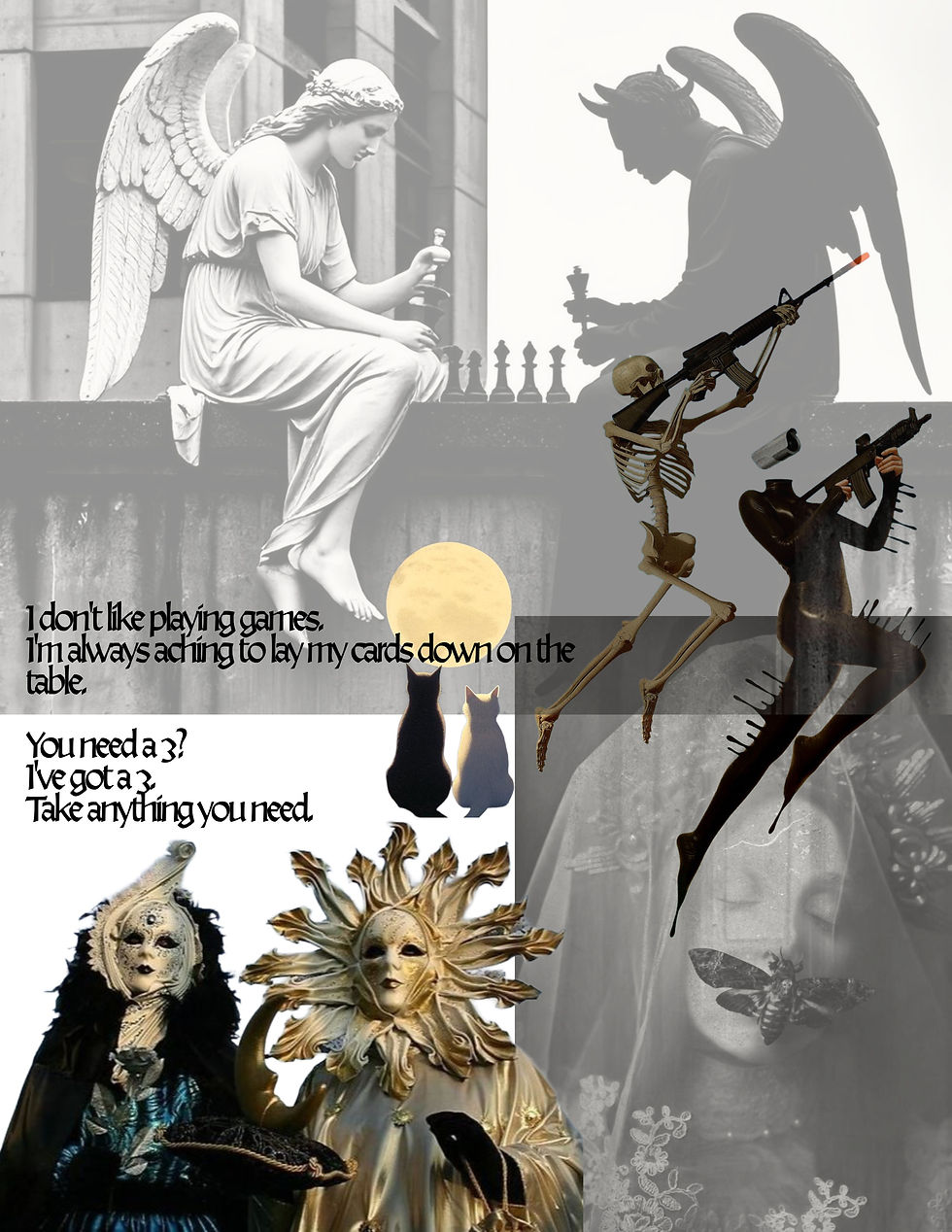
Vallie is an interdisciplinary artist whose practice bridges social inquiry and artistic experimentation. A graduate of Rollins College with a background in Sociology and International Politics, she has also formally studied law, broadcasting, film, and behavioral health. While her academic path appears diverse, each discipline converges around a singular focus: a deep curiosity about human vicissitude and the evolving frameworks that shape identity.
Working primarily in mixed media and sound, Vallie creates three-dimensional collage works and immersive audio narratives that examine womanhood, the nuances of the Black experience, interpersonal relationships, and the layered meanings of family and home. Her practice is rooted in both lived experience and qualitative research, incorporating authentic artifacts alongside traditional materials such as acrylic paint, clay, wood, canvas, and recorded sound.
Vallie’s work merges sociological analysis with the human condition, transforming theory into tangible form. Through the integration of personal relics, found objects, and unexpected materials—from Swarovski crystals and car battery wires to acrylic nail extensions and police reports—she constructs visual hypotheses about identity, perspective, and emotional wholeness. At the core of her practice is authenticity: a commitment to examining complex themes with honesty, accessibility, and relational depth. Her work invites audiences to reflect on the relationship between identity and perception, encouraging dialogue rather than dismissal when confronted with differing perspectives.


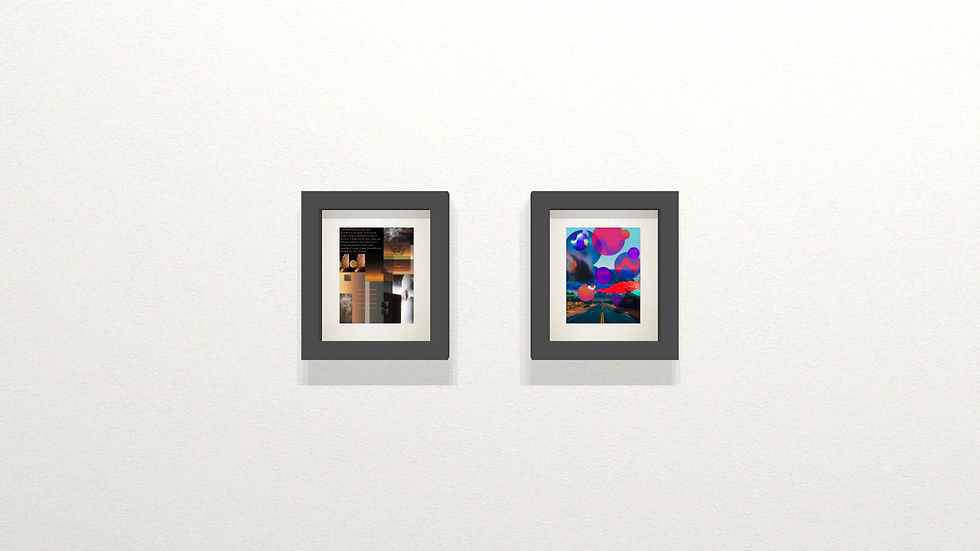
Solo Exhibition — Constructing Identity
By Sfumato
In Constructing Identity, Vallie presents a body of work that examines identity not as a fixed essence, but as an active construction—layered, negotiated, and continuously revised. Through three-dimensional collage and immersive sound, she transforms sociological inquiry into tangible form, revealing how perspective, memory, and environment shape who we become.
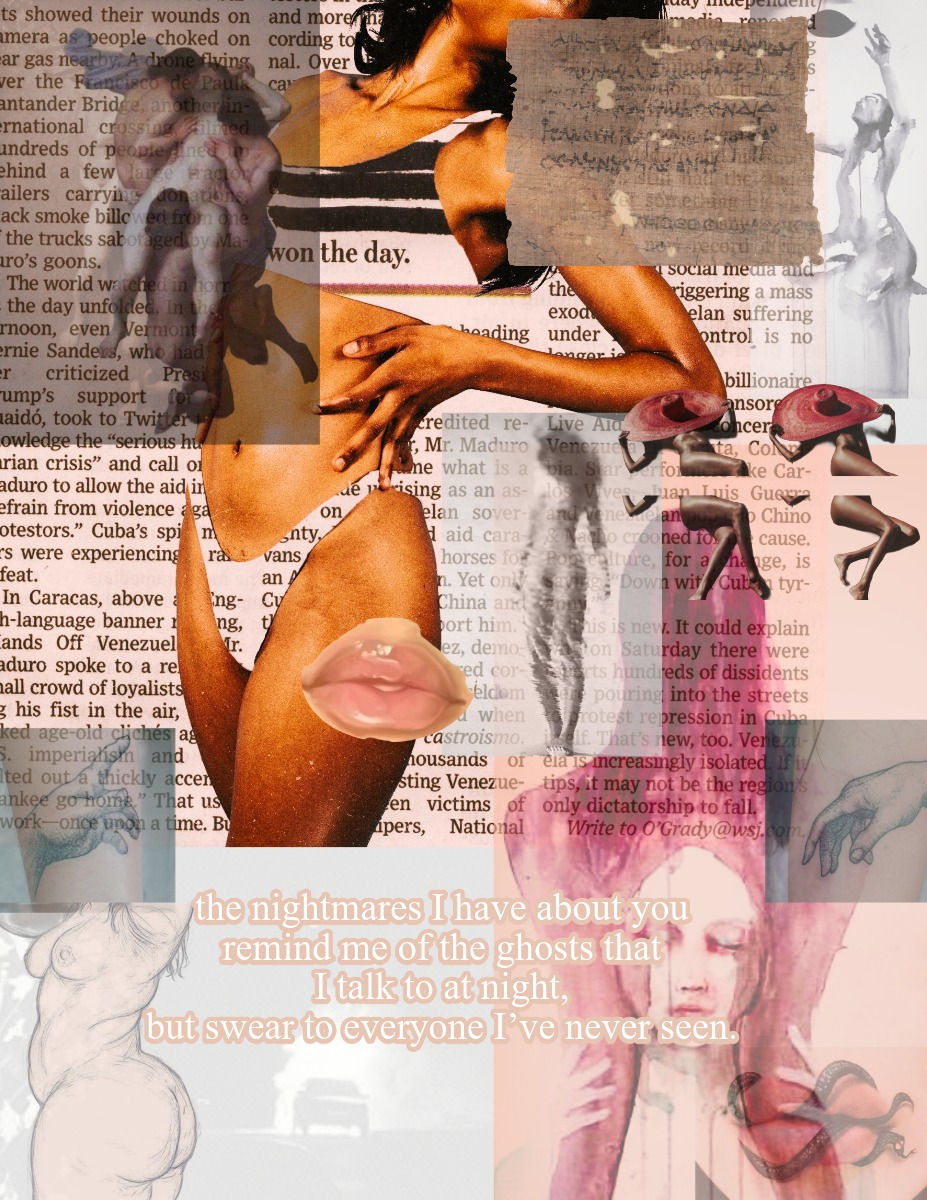
Drawing from her academic background in sociology, international politics, law, behavioral health, broadcasting, and film, Vallie approaches art as both investigation and embodiment. Each work operates as a visual hypothesis—an exploration of how lived experience and social frameworks intersect. Her materials are deliberate and conceptually charged: acrylic paint and clay coexist with condenser microphones, police reports, Swarovski crystals, car battery wires, acrylic nail extensions, and personal relics. These elements are not decorative—they are evidentiary. They serve as fragments of narrative, physical proof of the forces that construct identity.
Working primarily on wood and canvas, Vallie builds layered surfaces that mirror the complexity of the human condition. Themes of womanhood, the nuances of the Black experience, interpersonal relationships, family, and the concept of “home” recur throughout the exhibition. Yet these subjects are not presented as static categories. Instead, they are treated as evolving realities—shaped by perception and reframed through analysis.
Sound deepens this construction. Audio components embedded within select works give voice to memory and internal dialogue, expanding the visual experience into something immersive and intimate. The listener becomes aware that identity is not silent; it reverberates with inherited narratives, cultural expectations, and personal interpretation.
At the core of Constructing Identity lies authenticity. Vallie’s practice is rooted in qualitative observation and lived experience. By incorporating genuine artifacts from her research and life, she collapses the distance between theory and emotion. Social and psychological concepts become accessible—not abstract frameworks, but relatable human encounters.
The exhibition ultimately challenges a deeply ingrained impulse: the tendency to dismiss perspectives that contradict our own. Vallie suggests that identity is inseparable from viewpoint—that what we perceive as truth is often the product of our social positioning. By exposing the architecture behind belief, she invites viewers to reconsider how they construct meaning.
In Constructing Identity, wholeness is not portrayed as perfection or resolution. It emerges instead through acknowledgment—through the willingness to examine the layers, contradictions, and influences that shape us. Vallie does not offer definitive answers; she offers structure, space, and invitation. The viewer is left not only to observe the construction, but to reflect on their own.