HAUS
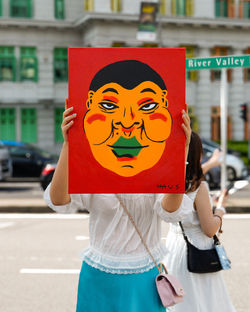
HAUS is an Australian-born contemporary artist whose vibrant studio practice spans Southeast Asia, with roots most recently in Singapore and Vietnam. His work is a dynamic exploration of color and form, built on a foundation of more than 20 years spent mastering design, digital arts, and photography. This extensive background has shaped a deep understanding of color theory and composition, qualities that immediately command attention in his paintings. A self-proclaimed admirer of Contemporary art, Abstract Expressionism, Neo-Expressionism, and Pop Art, HAUS draws inspiration from figures such as Tom Wesselmann, Kenny Scharf, Andy Warhol, and Jean-Michel Basquiat, alongside contemporaries including Monika Gil’Sing, Arik Brauer, Yayoi Kusama, and David Hockney. He channels their bold, unapologetic use of color and structure into a distinctly personal visual language. His debut series, 'Life, a Circus', is an immersive exploration of identity and self-expression, centered on the metaphorical “masks we wear.” The series pulses with the vibrant energy of a fair or carnival and is directly informed by his personal collection of traditional paper masks gathered during travels through Mexico, Southeast Asia, and Japan. Executed exclusively in acrylic on canvas, HAUS’ work represents a compelling convergence of Abstract Expressionism and Color Field painting. His technique is defined by vigorous, gestural application—thick brushstrokes, intentional splatter, and heavy layering—balanced by expansive fields of singular color. Prioritizing the raw aesthetic experience of color, texture, and movement over representation, HAUS creates non-objective works that are emotionally charged, deeply personal, and visually immersive.


HAUS: A conversation on color, courage, and the quiet bravery of beginning
In the work of HAUS, color is not decoration—it is language. Born in Australia and shaped by years of living and working across Southeast Asia, most recently in Singapore and Vietnam, HAUS approaches painting with the depth of someone who has spent a lifetime learning how images speak. His canvases pulse with movement and saturation, inviting the viewer into a world where emotion precedes explanation and sensation leads meaning. Before painting became his primary focus, HAUS spent over two decades immersed in design, digital arts, and photography. This long apprenticeship sharpened his instinct for composition and color theory—skills that now surface intuitively in his paintings. What distinguishes his practice is not only technical fluency, but a willingness to unlearn structure in pursuit of something more honest. When HAUS finally turned fully toward the canvas, it wasn’t for recognition or outcome, but for the rare freedom of creation without a brief, without an audience, and without permission.
His influences are worn openly and unapologetically. From the bold visual confidence of Andy Warhol, Jean-Michel Basquiat, Tom Wesselmann, and Kenny Scharf, to the immersive worlds of Yayoi Kusama and David Hockney, HAUS absorbs the fearless use of color and form that defines these artists. Yet his work never feels derivative. Instead, these references dissolve into a personal visual language shaped by travel, lived experience, and intuition.
This becomes especially clear in his debut painting series, 'Life, a Circus', an immersive exploration of identity and self-expression. The series centers on the idea of the “masks we wear”—the roles, personas, and performances we adopt to navigate the world. Drawing inspiration from a personal collection of traditional paper masks gathered during travels through Mexico, Southeast Asia, and Japan, HAUS transforms the canvas into a metaphorical carnival. The paintings hum with theatrical energy, echoing both celebration and concealment. Technically, the series sits at a dynamic intersection of Abstract Expressionism and Color Field painting. Working exclusively with acrylic on canvas, HAUS employs vigorous, gestural brushwork, heavy layering, and intentional splatter to build surfaces that feel alive and urgent. These raw, kinetic gestures are counterbalanced by expansive fields of singular color—moments of pause that allow mood, scale, and tone to breathe. The result is non-objective work that resists narrative while remaining deeply emotional, prioritizing the visceral experience of color, texture, and movement over representation. In conversation, HAUS speaks candidly about the challenges that accompany creative freedom. For him, the most persistent struggle is staying true to what he wants to make, regardless of external noise. Influence, he acknowledges, is inevitable—but the anchor must always be personal meaning. His process rarely makes visual sense at the beginning. Instead, he trusts that if the work makes sense internally, clarity will eventually emerge on the canvas.
 |  |
|---|---|
 |  |
 |  |
 |
When asked about his proudest moment, he doesn’t point to commercial milestones or accolades. Instead, he returns to a quieter memory: the first time he stood alone before a blank canvas, with no brief and no witnesses. That initial act—placing brush to canvas—remains one of the bravest decisions of his career.
Over time, HAUS’ perspective has shifted toward restraint. After moving through countless styles and disciplines, he has come to value simplicity—not as ease, but as discipline. To say more with less, while remaining emotionally precise, is a challenge he continues to embrace. And while he believes his style will evolve endlessly, he is fully present with where it stands now.
Support, for HAUS, has always come from friends and family, but inspiration comes from movement. Travel—new cities, unfamiliar faces, sensory overload—pushes him to create and share. Yet the most important journey, he reflects, has been learning to believe that his way of seeing truly matters.
His advice to emerging artists is direct and generous: trust your gut. Intuition, he insists, is the strongest asset an artist has. Follow what excites you with childlike curiosity, and speak from a place of authenticity. When the work comes from a genuine “I’m feeling this,” it will resonate.
Ultimately, HAUS defines success not through visibility or validation, but through time. The ability to spend it doing what he loves, with people he loves, is his measure of fulfillment. In a world that often demands speed and certainty, his practice stands as a reminder that creation—when rooted in honesty—can be both raw and deeply sustaining.